


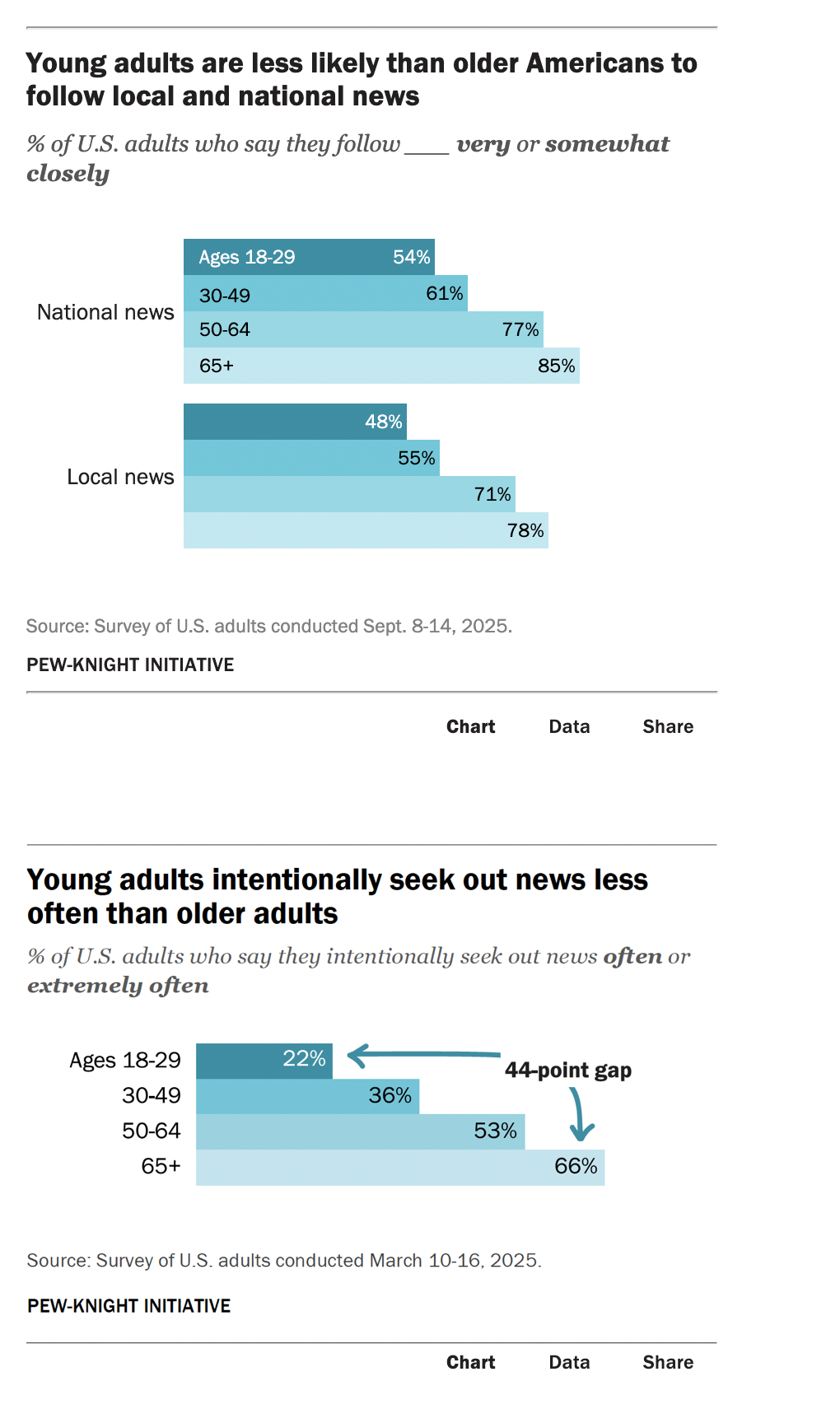
It’s no surprise that young Americans (ages 18–29) consume far less news than older adults. But the gap is striking: a 2025 Pew Research study found that only 15% of young adults say they follow the news all or most of the time, compared to 62% of those 65 and older—more than four times as many. When we look at what news younger Americans actually care about, the data shows that their interests lean toward entertainment, culture, social issues, and trending political moments—delivered quickly and often passively through their digital feeds.
Local news, however, tells an even sharper story. Pew reports that 48% of young adults follow local news, while 85% of older Americans regularly consume it—a 30-point gap. On campuses, only 22% of college students follow local news at all, which likely explains the challenges college newspapers face nationwide. Even though younger adults aren’t actively seeking news, the news still reaches them: 70% “bump into” political news on social media, compared with just 30% who intentionally seek it out.news. The Center shows that 48% of students follow local news compared to the 85% of Americans 65 and older who consume more local news, creating a 30-point gap. On campus, college students fall into the category of 22% consume local news. Which could be an accurate number for college newspapers across the U.S.
Even though the younger generation is not seeking the news, the news still finds them. Continuing their research, Pew reported that 70% of young adults happen to come across political news on social media, compared to 30% who seek it out.
Why are only 30% of young adults intentionally seeking the news?
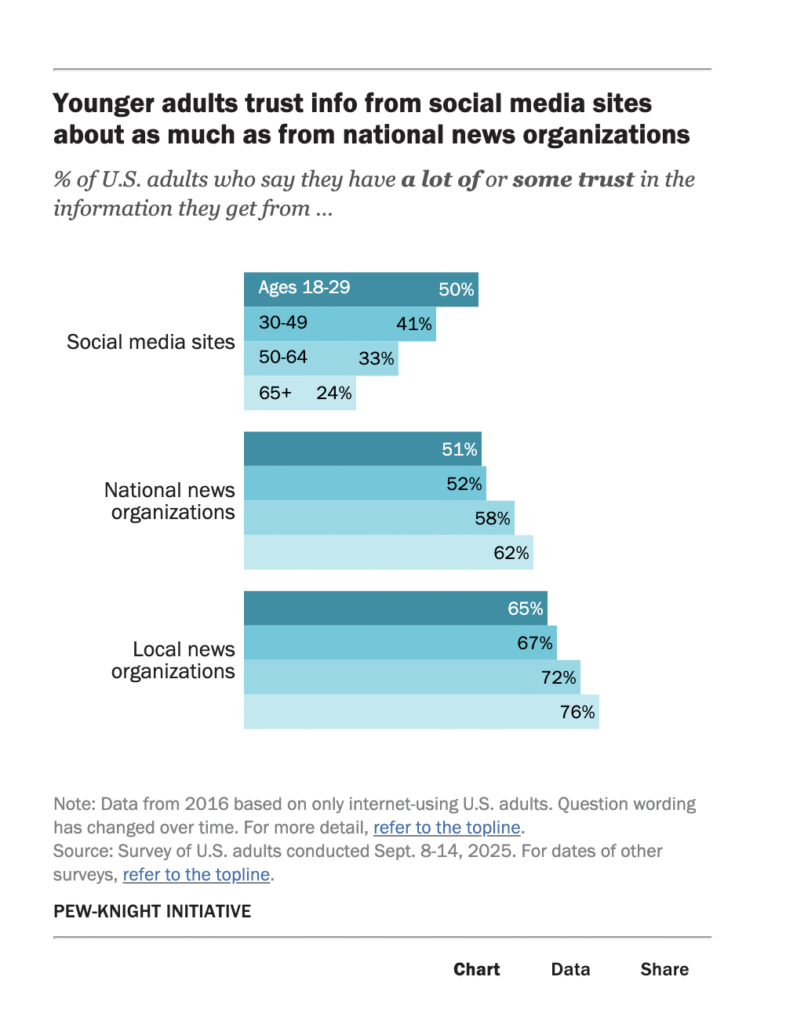
Pew’s research suggests that younger Americans feel less attached to their communities than older generations. Many also say the news makes them feel anxious, overwhelmed, or confused—33% report these feelings directly. And while 18% of young adults get news from print, an overwhelming 93% get it via digital devices. That number will not surprise anyone working at a campus that still maintains a print edition. Trust also differs by age: 50% of young adults say they trust the news they get on social media, compared to just 25% of adults 65 and older.
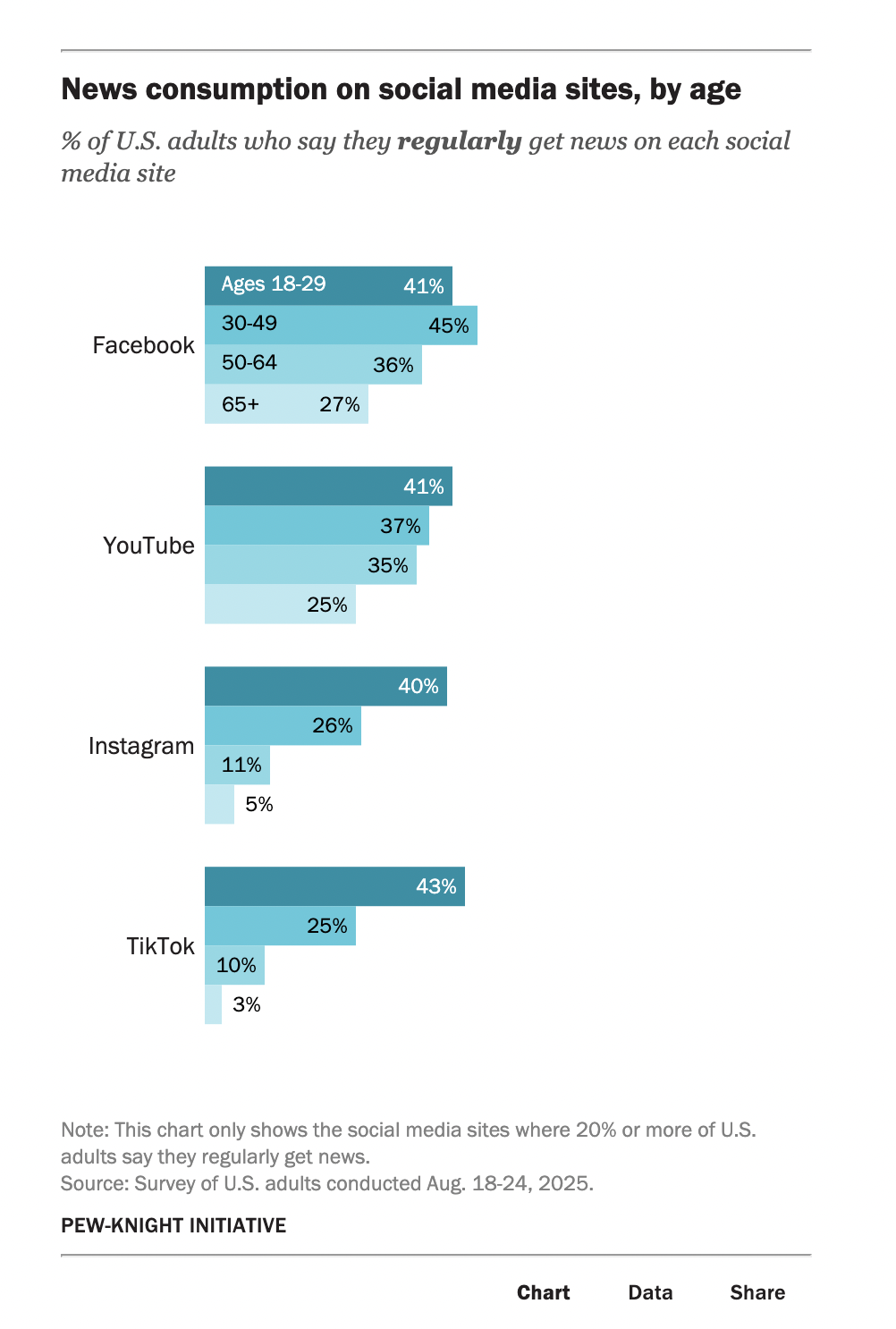
Where do young people get their news?
18% of young people get their news from print, but a whopping 93% get their news from digital devices. Coming from a university that still prints the paper, this number does not surprise me. Young adults trust the information they get on social media sites compared to older Americans. Pew found that 50% young adults trust the information they receive on social media sites compared to 65+ with 25%.
What does this mean for college newspapers across the U.S.? Will we continue to see fewer young readers interested in physical papers? And is there a realistic path to rebuilding local readership among young adults? These are the questions student publications must wrestle with as they rethink how to reach, engage, and rebuild trust with the next generation.